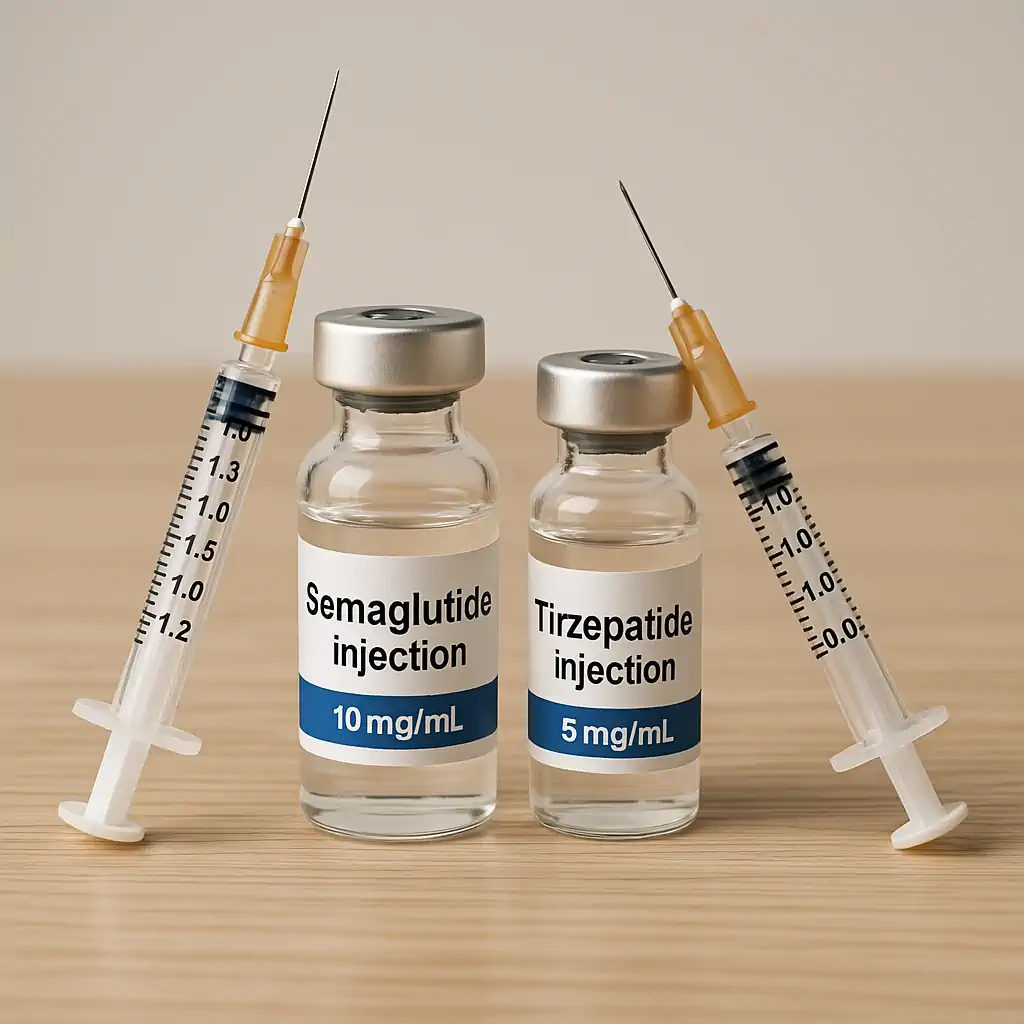
Semaglutide vs. tirzepatide is one of the first real decisions you’ll face when starting medical weight loss, and it’s worth getting right. Both are effective, FDA-approved, once-weekly injections — but they work slightly differently, produce different average results, and come with different side effect profiles and costs. Here’s what the actual clinical data shows, so you can have an informed conversation with your provider rather than guess.
Key Takeaways
- Semaglutide is a GLP-1 receptor agonist; tirzepatide is a dual GIP/GLP-1 receptor agonist — the added GIP pathway is the main biological difference between them.
- In the only head-to-head clinical trial comparing the two directly, tirzepatide produced significantly greater average weight loss than semaglutide: 20.2% vs. 13.7% of body weight at 72 weeks.
- Semaglutide tends to cause somewhat more frequent gastrointestinal side effects than tirzepatide, based on each drug’s own FDA trial data, though both are generally well tolerated.
- Neither medication is universally “better” — the right choice depends on your weight loss goals, medical history, side effect tolerance, and cost.
- Switching between the two is possible under medical supervision if one isn’t working well for you.
How They Work: Mechanism of Action
The core difference between semaglutide and tirzepatide is which hormone receptors they act on.
Semaglutide is a GLP-1 (glucagon-like peptide-1) receptor agonist. It mimics a natural gut hormone that:
- Slows gastric emptying, helping you feel full longer
- Signals the brain to reduce hunger and food cravings
- Helps the pancreas release insulin appropriately when blood sugar is high
Tirzepatide is a dual GIP (glucose-dependent insulinotropic polypeptide) and GLP-1 receptor agonist — it activates both pathways rather than one. It provides the same GLP-1 effects as semaglutide, plus GIP activation, which appears to further improve blood sugar regulation and may enhance the overall weight-loss effect. This dual mechanism is the leading explanation for why tirzepatide has outperformed semaglutide in clinical trials.
Effectiveness: What the Head-to-Head Trial Actually Shows
Most online comparisons cite weight-loss percentages pulled from separate trials — semaglutide’s STEP trials and tirzepatide’s SURMOUNT trials — which used different populations, doses, and durations, making a direct comparison unreliable. The better source is SURMOUNT-5, a randomized, head-to-head trial that put both medications against each other directly in the same study.
SURMOUNT-5 results at 72 weeks:
- Tirzepatide: −20.2% of body weight (average 22.8 kg lost)
- Semaglutide: −13.7% of body weight (average 15.0 kg lost)
The difference was statistically significant, and tirzepatide also showed larger improvements in blood pressure, HbA1c, triglycerides, and HDL cholesterol over the same period. That said, individual results vary substantially based on starting weight, dose, adherence, diet, and activity level — these are population averages, not a guarantee for any one person.
Side Effects: How the Two Compare
Both medications cause similar categories of side effects because both slow digestion, but the frequency differs somewhat based on each drug’s own FDA-reviewed trial data.
| Side Effect | Semaglutide | Tirzepatide |
|---|---|---|
| Nausea | ~44% | ~20-24% |
| Diarrhea | ~30% | ~15-21% |
| Vomiting | ~24% | ~11-12% |
| Constipation | ~24% | ~6-11% |
Semaglutide figures from Wegovy’s FDA prescribing information; tirzepatide figures from Zepbound’s FDA prescribing information.
In trials, tirzepatide’s dual mechanism appears to produce somewhat milder and less frequent gastrointestinal side effects than semaglutide alone, though both are usually most noticeable early in treatment or after a dose increase, and both tend to ease over time. For a full breakdown of what to expect and how to manage symptoms, see our semaglutide side effects guide and tirzepatide side effects guide.
Administration and Dosing
Both medications are given as once-weekly subcutaneous injections, typically in the abdomen, thigh, or upper arm, and both follow a gradual dose-escalation schedule — starting low and increasing every four weeks — specifically to minimize side effects while your body adjusts. Neither requires injecting more than once a week, and timing relative to meals doesn’t matter for either. If you want a full walkthrough of injection technique and site rotation, see our guides for tirzepatide injections and semaglutide injections.
Cost Considerations
Brand-name pricing for both medications is expensive without insurance — often well over $1,000 per month at retail for Zepbound, Mounjaro, Wegovy, or Ozempic. Manufacturer savings programs and insurance coverage can bring this down significantly for eligible patients, but many people are left paying out of pocket. This is where compounded formulations, prescribed and monitored by a licensed provider, offer a meaningfully more affordable path — see our current GLP-1 pricing and program details for what that looks like at Medica Weight Loss.
Insurance coverage for either medication varies significantly by plan, employer, and diagnosis. Some insurers cover these medications for type 2 diabetes but not for weight management alone, even though both are FDA-approved for chronic weight management independent of a diabetes diagnosis. If cost is a deciding factor between the two, it’s worth checking your specific plan’s formulary for both drug names before assuming either one is covered — coverage differences between semaglutide and tirzepatide products are common and can shift year to year.
Which One Is Right for You?
There’s no universal answer — the right medication depends on a combination of factors your provider will walk through with you:
- Weight loss goals: if you’re aiming for a larger percentage of total body weight loss, tirzepatide’s trial results are stronger on average — but “average” doesn’t predict your individual response.
- Side effect tolerance: if you’re especially concerned about nausea or GI symptoms, tirzepatide’s somewhat lower rates in trials may be a consideration, though individual experience varies.
- Medical history: conditions like diabetes, thyroid history, or gastrointestinal disease can make one medication more or less appropriate than the other.
- Cost and access: pricing, insurance coverage, and availability can be deciding factors regardless of clinical preference.
When Semaglutide Tends to Make Sense
Semaglutide has a longer real-world track record — it’s been used clinically for diabetes management since 2017 and for weight loss since 2021, so providers have more years of prescribing experience with it. It’s often a reasonable starting point for patients who want a well-established option, who are especially sensitive to new medications and want to start with the single-receptor mechanism, or whose insurance plan specifically covers semaglutide-based products but not tirzepatide.
When Tirzepatide Tends to Make Sense
Tirzepatide tends to be considered for patients prioritizing maximum average weight loss, those who have a higher starting BMI and more weight to lose, or those who didn’t reach their goals on semaglutide and are considering a switch. Because it also improves blood sugar control through the added GIP pathway, it’s sometimes preferred for patients managing both weight and blood sugar concerns together, though this should always be a decision made with your provider rather than a self-directed switch.
Who Should Be Cautious With Either Medication
Both drugs share some of the same safety considerations, since both are GLP-1 receptor agonists at their core. Neither should be used by anyone with a personal or family history of medullary thyroid carcinoma or Multiple Endocrine Neoplasia syndrome type 2 (MEN 2) — this is a boxed warning on both labels, based on thyroid C-cell tumors observed in animal studies. Both should be used cautiously, with close monitoring, in patients with a history of pancreatitis, gallbladder disease, or severe gastroparesis. Neither is recommended during pregnancy. A proper medical screening before starting either medication is what catches these risk factors — this isn’t something to self-assess.
Real-World Results vs. Trial Data
It’s worth separating what a clinical trial measures from what happens in everyday practice. SURMOUNT-5 was a controlled trial with structured dosing, monitoring, and support — real-world results depend heavily on consistent weekly dosing, working through the dose-escalation schedule rather than stalling at a lower dose due to side effects, and pairing the medication with sustainable nutrition and activity habits. Two patients on the same medication can have meaningfully different outcomes based on adherence alone, which is part of why ongoing provider support during treatment matters as much as the initial medication choice.
Can You Switch Between Semaglutide and Tirzepatide?
Yes — under medical supervision. If you’re not tolerating one well, or not seeing the results you expected after an adequate trial period, your provider can create a transition plan, often starting you at a lower dose of the new medication rather than a direct swap, to keep the switch safe and comfortable. If you’re considering stopping either medication rather than switching, read what happens if you stop taking semaglutide or tirzepatide first.
Frequently Asked Questions
Which is more effective for weight loss, semaglutide or tirzepatide? In the only head-to-head trial comparing them directly (SURMOUNT-5), tirzepatide produced significantly greater average weight loss — 20.2% vs. 13.7% of body weight at 72 weeks. Individual results still vary.
Does tirzepatide have fewer side effects than semaglutide? Based on each drug’s own FDA trial data, tirzepatide’s gastrointestinal side effects (nausea, diarrhea, vomiting, constipation) occurred somewhat less frequently than semaglutide’s, though both are generally well tolerated and side effects usually ease over time.
Why does tirzepatide work differently than semaglutide? Tirzepatide activates both the GLP-1 and GIP receptors, while semaglutide activates only GLP-1. That added GIP pathway is the leading explanation for tirzepatide’s stronger average results in trials.
Is tirzepatide always the better choice? Not necessarily. It performs better on average in trials, but the right medication depends on your individual tolerance, medical history, goals, and cost — not just which one wins on paper.
Can I switch from semaglutide to tirzepatide, or vice versa? Yes, under medical supervision. Your provider will typically start you on a lower dose of the new medication rather than switching directly at your prior dose.
How much do semaglutide and tirzepatide cost? Brand-name retail pricing for both is often over $1,000 per month without insurance, though savings cards, insurance, and compounded options can significantly reduce that cost. See our current program pricing for specifics.
Are semaglutide and tirzepatide injected the same way? Yes — both are once-weekly subcutaneous injections given in the abdomen, thigh, or upper arm, following a similar gradual dose-increase schedule.
Is semaglutide or tirzepatide safer? Both have similar safety profiles and share the same boxed warning regarding thyroid C-cell tumors seen in animal studies. Neither has been shown to be meaningfully “safer” than the other in a way that should override your provider’s individual assessment of your health history.
Does tirzepatide help with blood sugar more than semaglutide? Both improve blood sugar control, but tirzepatide’s added GIP activity has shown somewhat greater improvements in HbA1c in head-to-head data, which is one reason it’s sometimes favored for patients managing both weight and blood sugar together.
How long do I need to stay on semaglutide or tirzepatide to see results? Most patients begin noticing appetite changes within the first few weeks, with meaningful weight loss building over three to six months as the dose is titrated up. Both SURMOUNT-5 and the individual drug trials measured results at 68-72 weeks, reflecting that these are long-term treatments rather than short courses.
The Bottom Line
Tirzepatide has shown stronger average weight-loss results than semaglutide in the only direct head-to-head trial available, with somewhat fewer gastrointestinal side effects reported in trials — but “better on average” isn’t the same as “better for you.” Medical history, side effect tolerance, cost, and how your body responds all factor into the right choice. A medical evaluation with a licensed provider is the most reliable way to figure out which medication fits your specific situation. Ready to get started? Explore our GLP-1 programs and pricing or read our step-by-step guide to starting your weight loss journey with Medica.
This article is for general education and is not a substitute for personalized medical advice. Talk to your healthcare provider about which medication is appropriate for your individual health history and goals.
Sources
- SURMOUNT-5: Tirzepatide vs. Semaglutide head-to-head trial results, New England Journal of Medicine (2025)
- ZEPBOUND (tirzepatide) FDA Prescribing Information
- WEGOVY (semaglutide) FDA Prescribing Information