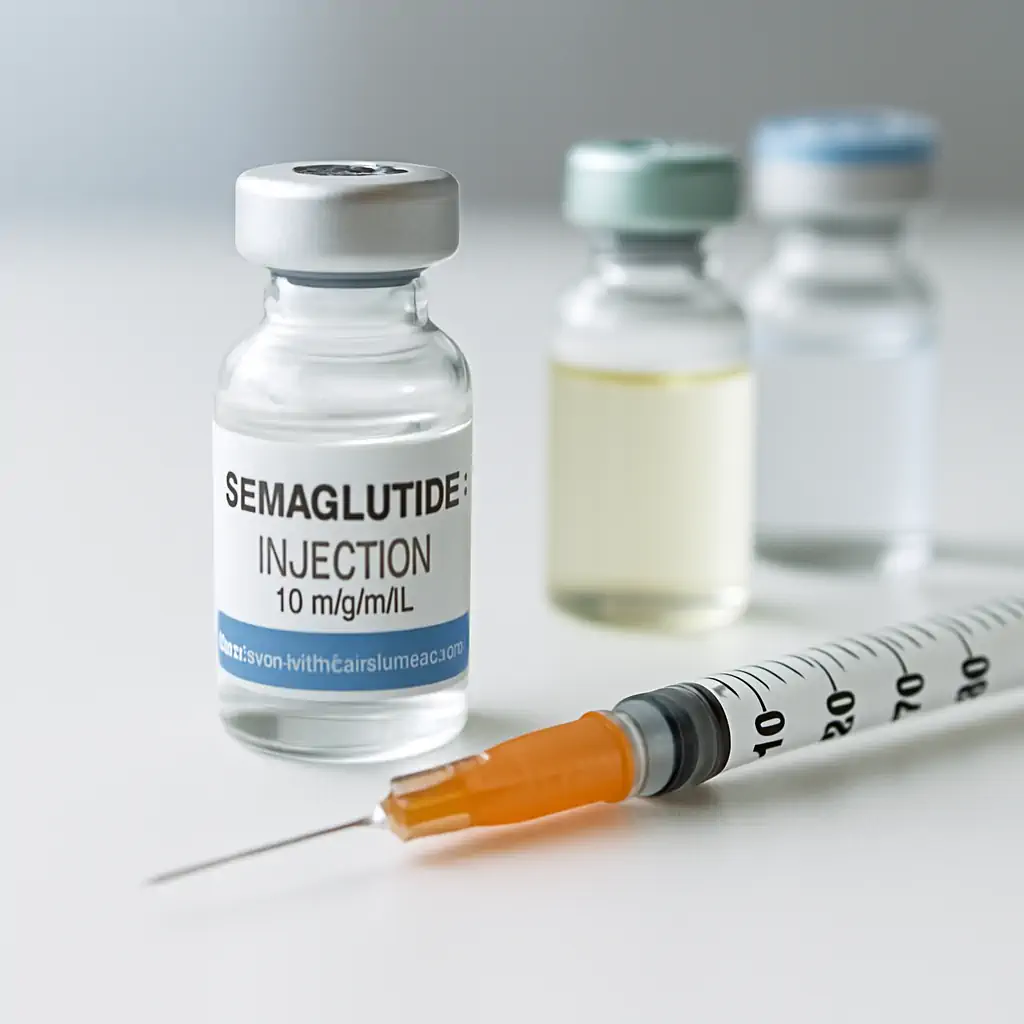
If you stop taking semaglutide or tirzepatide, what actually happens? It’s a question worth asking before it comes up, because plans change: costs shift, side effects get in the way, a goal weight is reached, or pregnancy planning, surgery, or a move changes the routine.
The research is fairly consistent, and it deserves a straight answer. On average, weight comes back after treatment ends, and some of the health markers that improved can drift back as well. It’s also true that the picture varies a great deal from person to person, and stopping does not have to mean starting over. This guide walks through what the major studies found, why the body responds this way, what can change beyond the scale, and how to plan a pause or an exit with a licensed clinician instead of by trial and error.
The Short Answer
In the clinical trials that studied this directly, participants who stopped treatment regained a large share of the weight they had lost, and many of their cardiometabolic improvements moved back toward where they started. Here are the main points to keep in mind:
- Appetite tends to return gradually as medication levels decline, so hunger and food thoughts can feel louder than they did on treatment.
- Weight regain is the average outcome, not a certainty. How much and how fast it happens differs between people.
- Health markers can shift too. Blood pressure, cholesterol, blood sugar, and waist circumference improvements may partly or fully reverse over time.
- A plan matters more than willpower. People who decide in advance how they’ll monitor, eat, move, and follow up are in a stronger position than those who stop suddenly and hope for the best.
- Restarting is possible, but the dose and timing are a prescriber’s decision.
What Happens When You Stop Taking Semaglutide or Tirzepatide
Both medications are dosed once a week and take time to clear the body, so nothing switches off overnight. If you’re curious about the specifics, our guide on how long semaglutide stays in your system covers the half-life and clearance timeline in detail. What matters here is what tends to follow.
The first weeks. As drug levels decline, the appetite-quieting effect fades gradually rather than abruptly. Many people describe a slow return of between-meal hunger, larger portions feeling normal again, and food becoming a more frequent thought. If you’ve been on treatment for a while, the quiet you got used to can be noticeably missed. Our article on food noise and the brain’s reward system explains why that mental chatter matters so much.
The following months. This is typically when the scale starts to move. In the trials described below, regain continued steadily throughout the first year off treatment rather than leveling off quickly. Eating patterns established during treatment can help, but they are now working without the medication’s appetite support.
The second year. Long-range modeling suggests that, on average, people may return close to their pre-treatment weight roughly a year and a half after stopping. That is an average projection across many studies, not a personal forecast, and individual results range widely in both directions.
What the Clinical Trials Show About Weight Regain
An important clarification before the numbers: the major withdrawal studies tested brand-name formulations of semaglutide and tirzepatide made by the trial sponsors. Medica Weight Loss dispenses compounded semaglutide and tirzepatide, prepared by a state-licensed compounding pharmacy based on an individual prescription. Compounded medications are not FDA-approved, so these results should not be assumed to apply identically to compounded formulations. They are, however, the most rigorous evidence available on what happens to the active ingredients’ effects when treatment stops.
Semaglutide: the STEP 1 extension. In the original STEP 1 trial, adults with overweight or obesity lost an average of 17.3% of their body weight over 68 weeks on semaglutide 2.4 mg, compared with 2.0% on placebo. A follow-up analysis of 327 participants tracked what happened after treatment and the structured lifestyle program both ended. In the STEP 1 extension published in Diabetes, Obesity and Metabolism, participants regained an average of 11.6 percentage points of body weight, about two-thirds of what they had lost, by week 120. Their net loss from the start of the study shrank to 5.6%.
Tirzepatide: SURMOUNT-4. In SURMOUNT-4, published in JAMA, participants took tirzepatide at their maximum tolerated dose for 36 weeks and lost an average of 20.9% of body weight. They were then randomly assigned to continue tirzepatide or switch to placebo for 52 more weeks. Those who continued lost an additional 5.5% on average, reaching an overall reduction of 25.3%. Those who switched to placebo regained 14.0% and ended with an overall reduction of 9.9%. At week 88, about 89.5% of the continuing group had kept at least 80% of their earlier weight loss, compared with 16.6% of the placebo group.
A later post hoc analysis of SURMOUNT-4 in JAMA Internal Medicine looked at participants who had lost at least 10% before stopping. By the authors’ regain categories, roughly 8 in 10 regained 25% or more of their lost weight within a year, while about 17.5% had limited regain, and a small fraction kept losing.
The bigger picture: a BMJ meta-analysis. A systematic review and meta-analysis in The BMJ (West et al., 2026) pooled 37 studies with more than 9,000 participants across weight management medications. The average regain after stopping was about 0.4 kg per month, with weight projected to return to baseline in roughly 1.7 years. For the newer, more effective incretin-based medications, the modeled rate was faster, about 0.8 kg per month with a projected return to baseline near 1.5 years. Regain after medication was also faster than after behavioral weight management programs, even after accounting for how much weight was lost initially.
Why the Weight Comes Back: Biology, Not Failure
It’s tempting to read these numbers as a willpower problem. The science points elsewhere. A well-known study in the New England Journal of Medicine (Sumithran et al., 2011) followed people after diet-induced weight loss and found that appetite-related hormones, including leptin and ghrelin, along with self-reported hunger, had not returned to their pre-diet patterns even a year later. In other words, the body treats weight loss as something to correct.
GLP-1 based medications are designed to work on the appetite-regulating pathways involved in that pushback. When treatment ends, the support ends with it, while the underlying biology remains. That helps explain why researchers describe obesity as a chronic condition that often needs long-term management, similar to blood pressure or cholesterol. If that framing is new to you, our piece on the science of obesity and why it isn’t about willpower goes deeper, and the hidden cost of not treating obesity medically looks at what’s at stake when care stops.
Emotional and stress-related eating can also become more noticeable when the medication’s effect fades. If that’s a pattern for you, our look at emotional eating and weight loss medication is worth reading before you make a change.
Health Markers Beyond the Scale
Weight is the most visible change, but it isn’t the only one. In the STEP 1 extension, improvements in cardiometabolic measures seen during treatment moved back toward baseline for most variables after semaglutide was withdrawn. In the SURMOUNT-4 post hoc analysis, participants who regained more weight saw larger increases in waist circumference and a greater reversal of their earlier cardiometabolic improvements than those who kept their weight down. The BMJ meta-analysis projected that markers such as blood pressure, cholesterol, triglycerides, fasting glucose, and HbA1c could return to baseline within about 1.4 years of stopping.
Two practical takeaways follow. First, if you started treatment partly for blood pressure, blood sugar, or insulin resistance, those numbers deserve follow-up after you stop, not just the scale. Second, if you’re also managing type 2 diabetes or high blood pressure with other medications, tell every clinician involved before you stop so your overall plan can be adjusted safely. Our article on weight loss, sleep apnea, and high blood pressure explains why these conditions often improve together, and why they can worsen together too.
Why Outcomes Vary From Person to Person
Averages hide a lot. In the SURMOUNT-4 post hoc analysis, a minority of participants kept most of their weight off after stopping, and a few continued to lose. Real-world data also tells a somewhat different story from trials. A Cleveland Clinic research team discussed in an AJMC interview found that many patients who stopped semaglutide or tirzepatide did not regain significant weight over the following months. The researcher offered two explanations: real-world patients often started with smaller weight losses than trial participants, and many kept pursuing weight management through other means rather than stopping everything at once.
Factors that may influence how your experience goes include:
- How much weight you lost and for how long. A larger loss leaves more room to regain, as the STEP 1 authors noted.
- Whether you’ve built supportive habits. Protein intake, resistance training, and daily movement help protect muscle, which matters for metabolic health. Our guide on muscle loss and protein on semaglutide covers this in detail.
- Sleep and stress. Poor sleep and high stress can both push appetite in the wrong direction. See our articles on sleep and weight loss and the cortisol connection.
- Whether the exit is planned. Stopping abruptly for a reason like cost or supply leaves less time to prepare than a deliberate transition.
- Follow-up. Regular check-ins make it easier to catch early regain and respond to it.
None of these guarantees a particular result, and no one can promise how your body will respond. They are simply the levers people and clinicians have to work with.
Common Reasons People Stop, and What to Do Before You Do
The reason behind stopping shapes the best next step. In most cases, the right first move is a conversation with your prescriber before the next dose, not after.
- Side effects. Nausea, constipation, fatigue, and headaches are common reasons people consider quitting. Adjusting the dose, timing, or eating habits can sometimes help, and that’s a decision for your clinician. Our guides to tirzepatide side effects and semaglutide side effects outline what’s typical and what to report.
- Cost or access. If money or supply is becoming a concern, raise it early so a plan can be built around it rather than facing an unplanned gap.
- Reaching a goal. Hitting a target weight can feel like a finish line. The trials above suggest it may be better viewed as a point to reassess with your clinician, since maintaining results is a separate question from achieving them.
- Planning a pregnancy. Discuss timing with your prescriber well before trying to conceive. Medication plans around pregnancy should always be individualized and clinician-directed.
- Surgery, illness, or travel. Temporary pauses are sometimes needed. Tell your care team about any upcoming procedure, and see our tips on traveling with weight loss medication if logistics are the issue.
Do You Need to Taper Off?
This is one of the most common questions, and the honest answer is that the evidence is limited. The withdrawal trials described above did not use a gradual step-down phase; treatment was stopped and participants were followed. They compared continuing at the study dose with stopping, not intermediate maintenance doses. That means there is no trial-established taper schedule to point to.
That doesn’t mean a gradual approach is wrong. Some prescribers individualize dose plans based on a person’s tolerance, goals, and circumstances, and whether a lower maintenance dose or a slower transition makes sense for you is a question for your clinician. What the evidence does support is the value of having a plan, monitoring what happens afterward, and not assuming that the results will hold on their own.
A Practical Plan for Stopping or Pausing
If you and your clinician decide that stopping or pausing is the right move, these steps can help you prepare:
- Talk first. Bring up your reason for stopping and ask about alternatives, such as dose changes, a temporary pause, or a different approach.
- Record your baseline. Note your current weight, waist measurement, and any recent blood pressure or lab values so you can spot changes early.
- Strengthen the habits that carry over. Prioritize protein, resistance training, hydration, and sleep. Our article on lifestyle shifts that maximize results and our 7-day GLP-1 meal plan are good starting points.
- Expect appetite to return. Plan meals, keep protein-forward options on hand, and decide in advance how you’ll handle the times of day when hunger is strongest.
- Schedule follow-ups. Agree with your clinician on when you’ll check in and what level of regain or change in health markers would prompt a conversation about next steps.
- Don’t wait for a large change to reach out. Early regain is easier to address than regain that has built up for months. If progress stalls or reverses, our guide to the weight loss plateau can help you tell the difference between normal fluctuation and a trend.
If You Decide to Restart
Many people stop and later return to treatment, and there is no shame in that. Restarting isn’t a failure; it’s a response to a chronic condition that changed. After a gap, your prescriber will decide whether to resume at your previous dose or reassess the starting point, since tolerance to side effects may differ after time off. Being honest about how long you were off, and how you felt during that time, gives your clinician what they need to make that call. Our GLP-1 weight loss timeline is a useful reference for what to expect as you get back on track.
Talking It Through With a Licensed Clinician at Medica
Whether you’re thinking about pausing, worried about cost, or wondering if you’re a fit for treatment in the first place, the safest path is an individualized conversation. At Medica Weight Loss, a consultation with a licensed provider is where questions like these get answered based on your health history, goals, and circumstances. You can learn more about our semaglutide and tirzepatide treatment options, read our comparison of semaglutide vs tirzepatide, or see whether you might be a good candidate for medical weight loss. When you’re ready to talk, you can contact us to schedule a consultation.
Frequently Asked Questions
Will I regain all the weight if I stop?
Not necessarily, but regaining a substantial portion is common. In the STEP 1 extension, participants regained about two-thirds of their lost weight within a year, and in SURMOUNT-4 the placebo group regained 14.0% of body weight. Individual results vary, and a small share of participants kept most of their loss.
Do I have to stay on these medications forever?
There is no single answer. Researchers increasingly describe obesity as a chronic condition that often requires ongoing management, and the trial authors concluded that continued treatment appears necessary to maintain the improvements in most people. Whether and how long you continue is an individual decision to make with your prescriber.
How soon will my hunger come back after stopping?
It varies. Because these medications clear the body gradually, many people notice appetite creeping back over the first several weeks rather than all at once. Tracking your hunger and eating patterns and sharing them with your clinician can help you respond early.
Is it safe to stop suddenly?
The trials that studied stopping did not use a tapering phase, and no established taper protocol exists. Still, it’s best not to make this decision alone. A clinician can help you weigh side effects, cost, and health conditions, and set up monitoring for afterward.
Can I restart after stopping?
Often, yes, but it’s a prescriber’s decision. They may reassess your starting dose and your health status before resuming, particularly if you’ve been off treatment for some time.
Will my blood pressure, cholesterol, or blood sugar change if I stop?
They can. In the STEP 1 extension, most cardiometabolic improvements moved back toward baseline after withdrawal, and the BMJ meta-analysis projected a return to baseline within about 1.4 years on average. If you have diabetes or high blood pressure, coordinate with all the clinicians managing your care.
Medica Weight Loss offers compounded semaglutide and tirzepatide, prepared by a state-licensed compounding pharmacy based on a valid individual prescription. These compounded medications are not FDA-approved — they have not been evaluated by the FDA for safety, effectiveness, or quality. Any reference to FDA-approved medications elsewhere refers solely to brand-name formulations such as Wegovy®, Ozempic®, Zepbound®, and Mounjaro®, which are not what Medica Weight Loss dispenses.