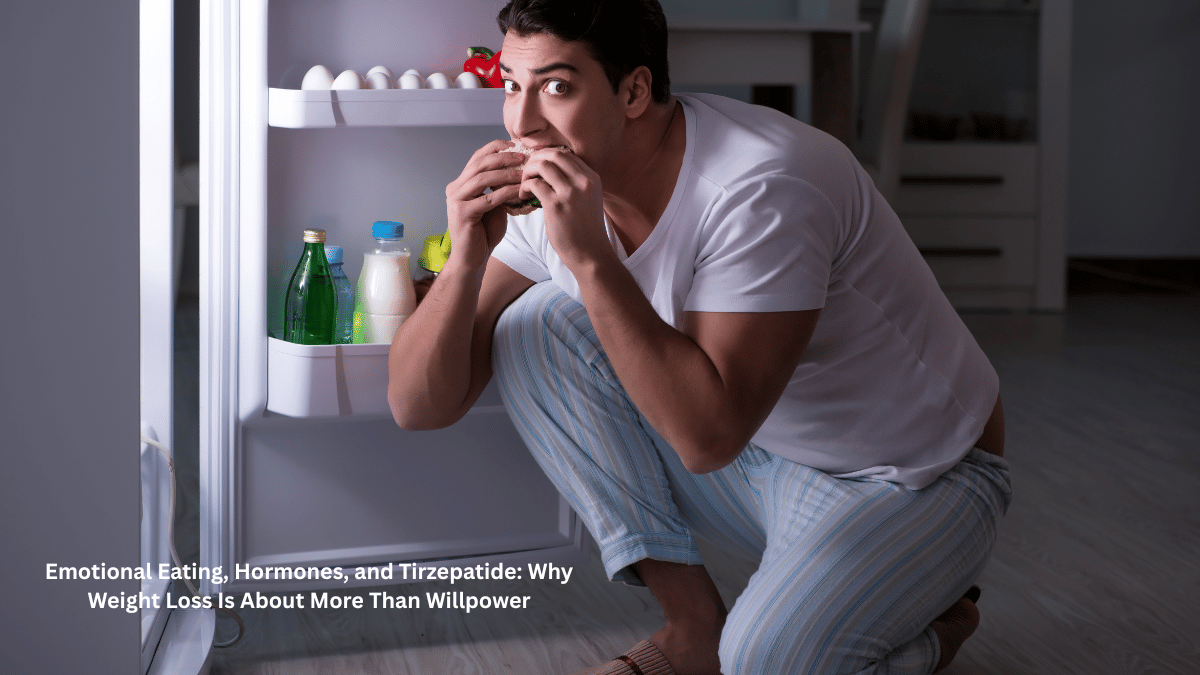
Emotional eating and weight loss medications intersect in ways that go well beyond “does it curb my appetite.” Anyone who’s struggled with stress eating, late-night cravings, or feeling mentally consumed by thoughts of food knows this isn’t simply a willpower problem — and increasingly, the science backs that up. Here’s what’s actually happening biologically, how medications like semaglutide and tirzepatide fit in, the broader psychological effects patients report, and an honest look at the mental health safety questions that deserve a real answer, not a dodge.
Key Takeaways
- Emotional eating is driven by real biological factors — hormones like ghrelin and cortisol, insulin resistance, sleep, and brain reward pathways — not simply a lack of discipline.
- “Food noise” (persistent, intrusive thoughts about food) is a real, widely reported experience that many patients say improves on GLP-1 medications, though emerging research suggests this effect may be strongest early in treatment rather than permanent.
- Beyond appetite, patients commonly report improvements in self-esteem, sleep quality, cognitive clarity, and social engagement as weight loss progresses.
- After reviewing safety data on GLP-1 medications and mood-related reports, the FDA found no causal link to suicidal ideation and requested the related warning be removed from Wegovy, Zepbound, and Saxenda labels — though this remains an area of ongoing monitoring.
- Medication works best combined with sleep, stress management, mindful eating, and — for some patients — therapy or counseling specifically addressing emotional eating patterns.
What Is Emotional Eating?
Emotional eating means eating in response to feelings rather than actual physical hunger — often triggered by stress, anxiety, loneliness, depression, fatigue, boredom, or simply seeking reward or comfort. It commonly shows up during stressful workdays, late at night, after conflict, or during periods of emotional overwhelm. Highly processed foods rich in sugar, fat, and salt temporarily activate reward centers in the brain, creating short-term relief — which is exactly what makes the cycle so hard to break on willpower alone.
The Hormone Connection Behind Cravings
Weight and appetite regulation involve a complex network of hormones, digestion, brain signaling, and metabolism — not just conscious choice.
Ghrelin, often called the “hunger hormone,” signals the brain to increase appetite. Stress, poor sleep, dieting, and weight fluctuations can all intensify ghrelin’s effect, making cravings feel stronger and harder to ignore.
Cortisol, the primary stress hormone, rises with chronic stress and has been associated with increased appetite, stronger cravings for high-calorie foods, emotional eating patterns, and abdominal fat accumulation — a big part of why comfort food cravings intensify during genuinely stressful periods.
Insulin resistance can also drive hunger and cravings: when the body struggles to regulate blood sugar efficiently, glucose fluctuations contribute to increased hunger, energy crashes, and stronger cravings. This is part of why obesity is far more biologically complex than “eating too much.”
What Is “Food Noise”?
Many patients on GLP-1 medications describe a dramatic reduction in something increasingly referred to as “food noise” — constant thoughts about food, obsessive cravings, preoccupation with eating, or feeling mentally consumed by hunger or snacking. Patients often describe always thinking about the next meal, struggling to feel satisfied, or feeling emotionally controlled by cravings. For many, the reduction in this mental noise — not just the number on the scale — is one of the most meaningful effects of treatment.
That said, it’s worth being precise about what’s actually known here. Research from Penn Medicine examining brain activity in patients on tirzepatide found that the medication’s suppression of activity in food-reward brain regions may be temporary rather than permanent, meaning food noise reduction could be strongest early in treatment and warrants realistic expectations rather than an assumption it disappears for good. This is an active area of research, not a settled question.
How GLP-1 Medications May Help With Emotional Eating
Tirzepatide activates both GLP-1 and GIP receptors; semaglutide activates GLP-1 alone. Both regulate appetite, blood sugar, digestion, and satiety — and while neither is officially FDA-approved specifically to treat emotional eating or binge eating disorder, many patients report real improvements in related behaviors, and emerging clinical research on GLP-1 medications has shown reductions in binge-eating episodes, food cravings, and related symptom scores in some studies.
Reduced appetite helps many patients feel full sooner and stay satisfied longer, which can reduce overeating, snacking, and impulsive eating.
Reduced food noise, as covered above, is one of the most commonly reported — and most personally meaningful — effects for many patients, even accounting for the caveats above.
Improved blood sugar stability from better insulin sensitivity may reduce some of the hunger and craving cycles tied to glucose swings.
More natural portion control — many patients eat smaller portions without feeling deprived, which is a meaningfully different experience than traditional dieting built on willpower against ongoing hunger.
Patients often describe this shift directly: a common report from people starting semaglutide or tirzepatide is something like “Now I know when I’m hungry. I don’t walk around with a feeling of fullness — food is no longer the enemy.” That mental shift, as much as the physical one, is what many patients say changes their relationship with eating.
Emotional Eating Is Not a Personal Failure
One of the most important things modern obesity medicine recognizes is that weight gain and overeating are influenced by biology, hormones, metabolism, environment, stress, sleep, medications, genetics, and brain signaling — not simply a lack of discipline. This doesn’t mean lifestyle choices don’t matter; nutrition, activity, sleep, stress management, and emotional health still matter tremendously. But understanding the biological side of weight regulation can meaningfully reduce shame and make it easier to seek appropriate support instead of blaming yourself for a pattern with real physiological roots.
Beyond Appetite: The Broader Psychological Effects of Weight Loss
Patients pursuing medically supervised weight loss commonly report changes that go beyond eating behavior itself:
Self-esteem and confidence. As progress becomes visible, many people report feeling more comfortable and empowered — a shift that often extends into relationships and professional life, not just how they see themselves in the mirror.
Sleep quality and cognitive clarity. Excess weight can negatively affect sleep patterns, and improved sleep quality that often accompanies weight loss can support better focus, memory, and decision-making. Poor sleep and weight also interact in the other direction — see our guide on how stress and sleep affect weight loss if this feels relevant to your own experience.
Social connection. As confidence grows, many people become more socially engaged, which can strengthen relationships and support networks — and having that support in turn tends to reinforce the changes driving it.
A different relationship with food. With structured guidance, many patients shift from viewing food primarily as a source of comfort toward viewing it as nourishment — a change that supports sustainable habits well beyond active treatment.
What About Reports of Depression, Anxiety, or Mood Changes?
This deserves a direct, honest answer rather than being ignored, especially on a page specifically about the mental and emotional effects of these medications. Early pharmacovigilance reports — data submitted to safety databases when patients or providers report a concern — showed an increased rate of suicidal ideation reports associated with GLP-1 medications, which prompted a formal review by the FDA. After a comprehensive evaluation, the FDA did not find that these medications cause suicidal thoughts or actions, and subsequently requested that the suicidal ideation and behavior warning be removed from the labeling of Wegovy, Zepbound, and Saxenda. Some observational research has even suggested a potentially lower rate of suicidal ideation among GLP-1 users compared with people not on these medications, though more research continues.
The honest summary: current evidence does not support a causal link between these medications and depression, anxiety, or suicidality, and the regulatory conclusion reflects that — but mood changes of any kind while on any medication are always worth reporting to your provider promptly rather than dismissing, both for your own care and because ongoing monitoring is part of how this evidence base continues to improve.
Medication Works Best Alongside Real Support
Medication can be a powerful tool, but long-term success with emotional eating specifically tends to depend on pairing it with real support: mindful eating practices, stress management, adequate sleep, protein-focused nutrition, and — for some patients — therapy or counseling such as CBT to directly address the emotional triggers behind eating patterns, rather than relying on appetite suppression alone to override them. If you’re comparing semaglutide and tirzepatide as you think through your own plan, our semaglutide vs. tirzepatide guide covers the practical differences.
How Medica Weight Loss Supports the Whole Picture
At Medica Weight Loss, treatment starts with an initial assessment that includes emotional eating patterns, not just weight and medical history. Weekly medication and lifestyle check-ins help track how you’re actually doing — physically and mentally — and adjust the plan accordingly, with coaching aimed at building sustainable coping strategies rather than relying on medication alone. For side-effect management specifically, see our semaglutide and tirzepatide side effects guides, and if you’re just getting started, our step-by-step guide to beginning treatment walks through what to expect.
Frequently Asked Questions
Can tirzepatide or semaglutide stop emotional eating completely? No medication eliminates emotional eating entirely, but many patients report meaningfully fewer cravings and less food-related preoccupation while on treatment, especially when combined with other support.
What is food noise? Food noise refers to persistent, intrusive thoughts about food, cravings, or a general mental preoccupation with eating that many people describe as exhausting. Many patients on GLP-1 medications report this quieting significantly, though research suggests the effect may lessen over time rather than being permanent.
Do weight loss medications cause depression or anxiety? Current evidence does not support a causal link. After reviewing safety data, the FDA requested removal of the suicidal-ideation warning from GLP-1 medication labels for lack of evidence supporting the concern — but any new or worsening mood symptoms should still be reported to your provider promptly.
Is emotional eating only caused by stress? No — it can involve stress, hormones, sleep quality, insulin resistance, brain chemistry, habits, and environmental triggers, often in combination rather than any single cause.
Will weight loss medication improve my mood on its own? Some patients report improved mood alongside physical progress, but this varies significantly between individuals, and medication isn’t a substitute for addressing mental health directly if that’s a significant factor for you.
Should I combine medication with therapy for emotional eating? For many patients, yes — approaches like CBT that directly address emotional eating triggers tend to produce more durable results than medication alone, since medication addresses appetite biology but not necessarily the underlying emotional patterns.
Is obesity just about willpower? No. Modern medical research recognizes obesity as a complex chronic condition shaped by biological, hormonal, genetic, behavioral, and environmental factors — not simply a matter of discipline.
The Bottom Line
Emotional eating is shaped by far more than self-control — hormones, stress, sleep, metabolism, and brain signaling all play real roles, and medications like semaglutide and tirzepatide can meaningfully help by reducing appetite, lowering food noise, and improving satiety for many patients. The psychological effects of weight loss often extend well beyond eating behavior into self-esteem, sleep, and relationships. And on the mental health safety questions people understandably want answered directly: current evidence doesn’t support a causal link to depression or suicidality, though it’s an area that continues to be monitored, and any mood changes are always worth discussing with your provider.
This article is for general education and is not a substitute for personalized medical or mental health advice. If you’re experiencing thoughts of self-harm, please contact a mental health professional or crisis resource — this article cannot provide that support.