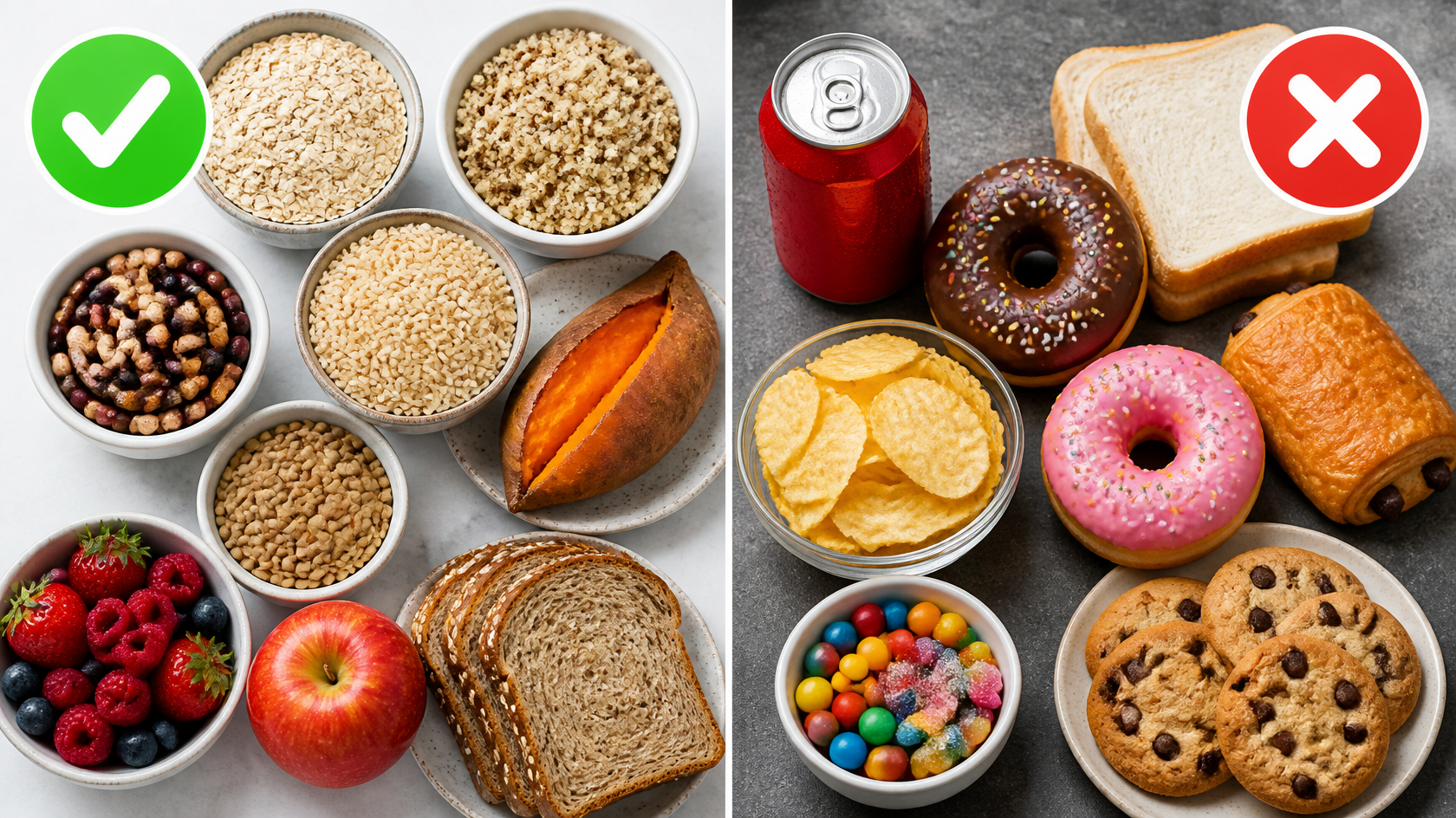
If you’ve started a GLP-1 medication, you’ve probably heard conflicting advice about carbs. One person says cut them completely. Another says it doesn’t matter what you eat because the medication does the work. The truth sits in between: you can eat carbs on GLP-1 treatment, and most people should. What changes is which carbs you choose, how much fits on a smaller plate, and when you eat them during a meal.
This guide covers carbs on GLP-1 medication from a practical angle: why your body still needs them, why going “zero carb” often backfires when your appetite is already low, how to pick carbs that work with the medication instead of against it, and a simple way to build each plate. If you want a ready-made weekly menu, see our 7-day GLP-1 meal plan. This post is about the reasoning behind the carb choices, so you can make good decisions on your own.
Can You Eat Carbs on GLP-1 Medication?
Yes. No clinical guideline tells people on semaglutide or tirzepatide to avoid carbohydrates. In 2025, four major groups (the American College of Lifestyle Medicine, the American Society for Nutrition, the Obesity Medicine Association, and The Obesity Society) published a joint advisory on nutrition during GLP-1 therapy in the journal Obesity. It doesn’t ban carbs. It recommends limiting refined carbohydrates (white flour, starches, and sugars) and choosing whole grains and other fiber-rich foods, alongside enough protein and fluids.
The 2025–2030 Dietary Guidelines for Americans take a similar line for the general public: two to four servings of whole grains a day, fewer highly processed refined carbohydrates, and as little added sugar as possible.
So the useful question isn’t “carbs or no carbs.” It’s “which carbs, and how much, now that I’m eating less overall?”
Why Your Body Still Needs Carbohydrates
Carbohydrates are your body’s preferred quick fuel. When you digest them, they break down into glucose, which your brain, red blood cells, and working muscles use for energy. The National Academies set the Recommended Dietary Allowance for carbohydrate at 130 grams per day for adults, based on the brain’s average glucose needs. The same report puts the healthy range at 45% to 65% of daily calories.
Carbohydrate foods also carry nutrients that are hard to get elsewhere:
- Fiber, found only in plant foods such as beans, whole grains, fruit, and vegetables
- B vitamins such as folate and thiamine, which help your body turn food into energy
- Potassium and magnesium, abundant in potatoes, beans, bananas, and leafy greens
- Plant compounds (polyphenols and antioxidants) in berries, oats, and colorful produce
This matters more on a GLP-1 medication, not less. The joint advisory notes that people eating fewer than about 1,200 calories a day (women) or 1,800 (men) face a higher risk of running low on nutrients, including magnesium, vitamin B1 (thiamine), and vitamin C. Many carb-containing whole foods are some of the best sources of exactly those nutrients. Cutting them out of an already small diet can make shortfalls more likely.
Why Going “Zero Carb” Can Backfire on a GLP-1
Low-carb eating can work for some people, and if your provider has suggested a structured lower-carb plan, follow that guidance. But stripping carbs out completely while on a GLP-1 medication creates a few specific problems.
Problem 1: Constipation Gets Worse
GLP-1 medications slow how quickly food leaves your stomach and moves through your gut. That’s part of why you feel full longer, and it’s also why constipation is one of the most common side effects. In the STEP 1 trial of semaglutide 2.4 mg, 74.2% of participants on the medication reported gastrointestinal side effects, compared with 47.9% on placebo.
Fiber helps keep things moving, and fiber comes almost entirely from carbohydrate foods. A diet built only on meat, eggs, and cheese has almost no fiber at all. The joint advisory also points out that high-protein and high-fat foods can slow stomach emptying even further. Pairing a slower gut with a no-fiber diet is a common recipe for discomfort. For more on handling GI symptoms, see our guides to semaglutide side effects and tirzepatide side effects.
Problem 2: Fatty Meals Can Increase Nausea
When people cut carbs, they often replace them with more fat: bacon, butter, cheese, heavy sauces. On a GLP-1 medication, large or high-fat meals are a frequent trigger for nausea, reflux, and diarrhea, which is why the joint advisory recommends avoiding them when these symptoms show up. Our post on foods to avoid while taking tirzepatide goes into the specific trigger foods. A plate with lean protein, vegetables, and a modest portion of whole-grain carbs is usually easier on the stomach than a plate that’s mostly fat.
Problem 3: Low Energy and Harder Workouts
When you’re eating much less than before, and also cutting nearly all carbs, it’s common to feel tired, foggy, or weak, especially in the first weeks. Your muscles store carbohydrate as glycogen and rely on it for higher-effort activity like strength training, brisk walking uphill, or cycling. Strength training is one of the main ways to protect muscle during GLP-1 weight loss, so you want enough fuel to actually do it. (We cover the muscle side in detail in our post on protein and muscle loss on semaglutide.)
Problem 4: It Rarely Lasts
The long-term goal of medical weight loss isn’t just losing weight. It’s building eating habits you can live with, including after your provider adjusts or changes your plan. The large DIETFITS trial, published in JAMA in 2018, randomly assigned 609 adults to a healthy low-fat or a healthy low-carb diet for 12 months. Weight loss was similar between the two groups. What both groups had in common was an emphasis on whole, minimally processed foods and vegetables. In other words, food quality mattered more than cutting a whole food group, and the best plan was the one people could stick with.
Not All Carbs Work the Same on a GLP-1
Think of carbohydrates on a spectrum. At one end are slow, fiber-rich carbs that come packaged with nutrients. At the other end are fast, refined carbs that digest quickly and do little to keep you satisfied.
Carbs that tend to work well:
- Beans, lentils, and chickpeas, which give you carbs, fiber, and protein in one food
- Oats, barley, quinoa, farro, and brown rice
- Whole fruit, especially berries, apples, pears, and citrus
- Starchy vegetables such as sweet potatoes, potatoes with the skin, squash, peas, and corn
- Plain yogurt and milk, which add carbs along with protein and calcium
- 100% whole-grain bread or tortillas (check that a whole grain is the first ingredient)
Carbs to keep small or occasional:
- Soda, sweet tea, juice, and sweetened coffee drinks
- Pastries, candy, cookies, and most packaged desserts
- White bread, crackers, and many breakfast cereals
- Chips and fried snack foods (these are refined carbs and high fat, a double trigger for GI upset)
The difference isn’t just about calories. A series of meta-analyses published in The Lancet in 2019, commissioned by the World Health Organization, found that people eating 25 to 29 grams of fiber per day had a 15% to 30% lower risk of death from all causes and from cardiovascular disease, along with lower rates of coronary heart disease, stroke, type 2 diabetes, and colorectal cancer, compared with people eating the least fiber. Whole grains showed similar benefits. Those findings are observational, so they show an association rather than proof of cause, but they line up with what clinical guidelines recommend.
Sugary Drinks: The One Carb Worth Cutting First
If you change only one carb habit, make it liquid sugar. Sweetened drinks deliver a lot of sugar with no fiber, no protein, and very little fullness. The 2025–2030 Dietary Guidelines specifically call out sugar-sweetened beverages and recommend avoiding added sugars as much as possible.
On a GLP-1 medication there’s another reason to skip them: your stomach has less room, and you want that room for foods that actually feed you. Water, sparkling water, unsweetened tea, and black coffee are better everyday choices. Our GLP-1 hydration guide covers how much fluid to aim for.
How Much Fiber Should You Aim For?
The Lancet analysis above found the strongest benefits at 25 to 29 grams of fiber daily, and higher intakes looked even better. Most adults fall short of that range. On a GLP-1 medication, though, the way you get there matters.
The joint advisory recommends a gradual increase in fiber, from both soluble sources (oats, beans, apples, chia) and insoluble sources (whole grains, vegetables, nuts). It also notes that very high-fiber foods may be worth limiting for the first few days of treatment if you’re dealing with nausea. A good approach:
- Add one fiber-rich food per day for a week, then add another the next week
- Drink more water as you add fiber, since fiber needs fluid to work well
- Spread fiber across the day instead of packing it all into one meal
- If you’re struggling with constipation, talk to your provider. The advisory notes that food alone isn’t always enough, and options like fiber supplements may help
Eat Your Carbs Last: Why Meal Order Matters
Here’s a simple habit that requires no extra food: eat the protein and vegetables on your plate first, then the starchy carbs.
In a small study published in Diabetes Care in 2015, researchers had 11 adults with obesity and type 2 diabetes eat the same meal in two different orders. When they ate carbs last, their blood sugar was 28.6% lower at 30 minutes, 36.7% lower at 60 minutes, and 16.8% lower at 120 minutes compared with eating carbs first. It was a small study in people with diabetes, so results may differ for others, but the habit is low-effort and low-risk.
Meal order helps in a second way on a GLP-1 medication. Because you fill up quickly, the food you eat first is the food you’re most likely to finish. Starting with protein and vegetables means the most important parts of your meal don’t get left behind when fullness kicks in. If you want to understand how blood sugar and insulin connect to weight, our post on insulin resistance and GLP-1 medications explains it in plain terms.
How to Build a Plate That Includes Carbs on GLP-1
You don’t need to count every gram. A simple plate model works for most people:
- Protein first, about a quarter to a third of the plate: chicken, fish, eggs, tofu, Greek yogurt, lean beef, or beans. The joint advisory suggests 1.2 to 1.6 grams of protein per kilogram of body weight per day during active weight loss, or a simpler target of 80 to 120 grams a day. Your provider can help set the right number for you.
- Non-starchy vegetables, about half the plate: leafy greens, broccoli, peppers, zucchini, green beans, tomatoes. Cooked vegetables are often easier to tolerate than large raw salads early in treatment.
- A fist-sized portion of fiber-rich carbs: half a cup to a cup of brown rice, quinoa, beans, or roasted potatoes, or a slice of whole-grain bread, or a piece of fruit.
- A small amount of healthy fat: a drizzle of olive oil, a few slices of avocado, or a small handful of nuts.
Because your portions will likely be smaller than before, think in terms of balance rather than volume. A small plate with all four parts beats a big plate of just one.
Smart Carb Swaps That Fit a Smaller Appetite
These swaps keep the comfort of familiar foods while adding fiber, protein, or both:
- White rice → brown rice, or half white and half cauliflower rice
- Regular pasta → bean- or lentil-based pasta, which adds protein and fiber
- Sugary cereal → plain oats with berries and a scoop of Greek yogurt
- Flavored yogurt → plain Greek yogurt with fruit
- Chips → roasted chickpeas or air-popped popcorn
- Juice → whole fruit
- White bread → 100% whole-grain or sprouted bread
- Dessert most nights → fruit most nights, with a planned treat once or twice a week
Many people find that GLP-1 medications quiet the constant pull toward sweets and snacks, sometimes called “food noise.” That can make these swaps easier than they would have been before. Our post on semaglutide and food noise explains why.
Timing Carbs Around Your Day and Your Workouts
There’s no single “right” time to eat carbs, but a few patterns help many people on GLP-1 medications:
- Don’t skip meals for long stretches. The joint advisory notes that long gaps between meals can lead to rebound cravings for sweets and refined carbs later in the day. Smaller, regular meals usually work better than one big one.
- Put some carbs before exercise. A banana, a slice of whole-grain toast, or a small bowl of oats an hour or two before a workout can help you train harder without feeling drained.
- Pair carbs after a workout with protein. Greek yogurt with fruit, or a turkey wrap on a whole-grain tortilla, helps refuel and supports muscle repair.
- Keep evening carbs moderate if late meals upset your stomach. Some people find heavy dinners worsen reflux on a GLP-1. Lighter evening meals can help.
Signs You May Be Eating Too Few Carbs
Because GLP-1 medications reduce hunger, it’s possible to undereat carbs without trying. Watch for:
- Ongoing fatigue, dizziness, or brain fog
- Constipation that doesn’t improve with fluids
- Workouts that feel much harder than they should
- Headaches, especially alongside low fluid intake (see our post on tirzepatide headaches)
- Strong cravings for sweets after going all day with little food
These symptoms can have other causes too, so mention them to your provider rather than guessing. If you have diabetes and take insulin or a sulfonylurea along with your GLP-1 medication, low blood sugar is a real risk, and the joint advisory flags this group specifically. Don’t make big changes to your carb intake without talking to your care team first.
Signs You May Want to Adjust Your Carb Choices
On the other side, it may be time to rethink which carbs you’re eating if:
- Most of your carbs come from drinks, snacks, or desserts
- You feel hungry again soon after eating
- You’re eating so many starchy foods that there’s no room left for protein
- Your weight loss has stalled for several weeks (our weight loss plateau guide covers the other common causes)
The fix usually isn’t eating zero carbs. It’s shifting toward the fiber-rich options above and putting protein first.
How Your Provider Fits In
GLP-1 medications work best as part of a full plan that includes nutrition, movement, sleep, and regular check-ins. In clinical trials, the medications were studied alongside lifestyle counseling. For example, participants in STEP 1 lost an average of 14.9% of their body weight on semaglutide 2.4 mg over 68 weeks, and participants in SURMOUNT-1 lost an average of up to 20.9% on the highest tirzepatide dose over 72 weeks, both with diet and activity guidance. Those results came from brand-name medications studied in controlled trials. Individual results vary, and no outcome is guaranteed.
At Medica Weight Loss, treatment starts with a consultation with a licensed provider, who reviews your health history and goals to decide whether a GLP-1 medication is right for you. If you’re curious whether you qualify, read how to know if you’re a good candidate for medical weight loss, or learn more about our semaglutide and tirzepatide programs. When you’re ready, our step-by-step guide to getting started walks you through the process.
Frequently Asked Questions About Carbs on GLP-1
Do I need to follow a low-carb or keto diet on semaglutide or tirzepatide?
No. No major clinical guideline requires a low-carb or keto diet during GLP-1 treatment. The 2025 joint nutrition advisory focuses on food quality: fewer refined carbs and sugars, more whole grains, fruits, vegetables, and beans, and enough protein. If you prefer a lower-carb style, talk with your provider about doing it in a way that still gives you enough fiber and nutrients.
Will eating carbs stop the medication from working?
No. GLP-1 medications work on appetite, fullness, and blood sugar regulation, and they keep working when you eat carbohydrates. Very high intakes of sugary foods and drinks can still slow your progress, the same way they would without medication.
How many carbs should I eat per day on a GLP-1?
There’s no single number for everyone. The National Academies’ minimum for adults is 130 grams a day, based on the brain’s glucose needs. Your ideal amount depends on your size, activity level, health conditions, and how much you’re able to eat. Your provider can help you find the right range.
Are fruits too high in sugar while on a GLP-1?
Whole fruit is a good choice for most people. The sugar in fruit comes with fiber, water, vitamins, and plant compounds, and the 2025–2030 Dietary Guidelines don’t count naturally occurring fruit sugar as added sugar. Fruit juice is a different story, since it removes most of the fiber.
Why do some carbs make my nausea worse?
Often it isn’t the carb itself but what comes with it. Fried foods, creamy sauces, and greasy pastries combine refined carbs with a lot of fat, and high-fat meals are a common nausea trigger on GLP-1 medications. Large portions can also cause trouble. Try smaller servings of plainer carbs, like oatmeal, rice, toast, or potatoes, especially after a dose increase.
Is it okay to have dessert on a GLP-1?
An occasional treat fits into most plans. Because your stomach holds less, plan it as a small portion after a balanced meal rather than a replacement for one. If you notice sweets make you feel unwell, that’s useful feedback to scale back.
The Bottom Line
Carbs on GLP-1 medication aren’t the enemy. Your body still needs them for energy, fiber, and key nutrients, and cutting them out completely can make constipation, nausea, and fatigue harder to manage. The goal is to choose slower, fiber-rich carbs, keep sugary drinks and refined snacks to a minimum, eat protein and vegetables first, and fit a modest portion of quality carbs onto a smaller plate. Small, steady changes like these are easier to keep than any all-or-nothing rule.
This article is for educational purposes only and is not a substitute for medical advice. Talk with your healthcare provider before making changes to your diet, especially if you have diabetes or take other medications that affect blood sugar.
Medica Weight Loss offers compounded semaglutide and tirzepatide, prepared by a state-licensed compounding pharmacy based on a valid individual prescription. These compounded medications are not FDA-approved — they have not been evaluated by the FDA for safety, effectiveness, or quality. Any reference to FDA-approved medications elsewhere refers solely to brand-name formulations such as Wegovy®, Ozempic®, Zepbound®, and Mounjaro®, which are not what Medica Weight Loss dispenses.