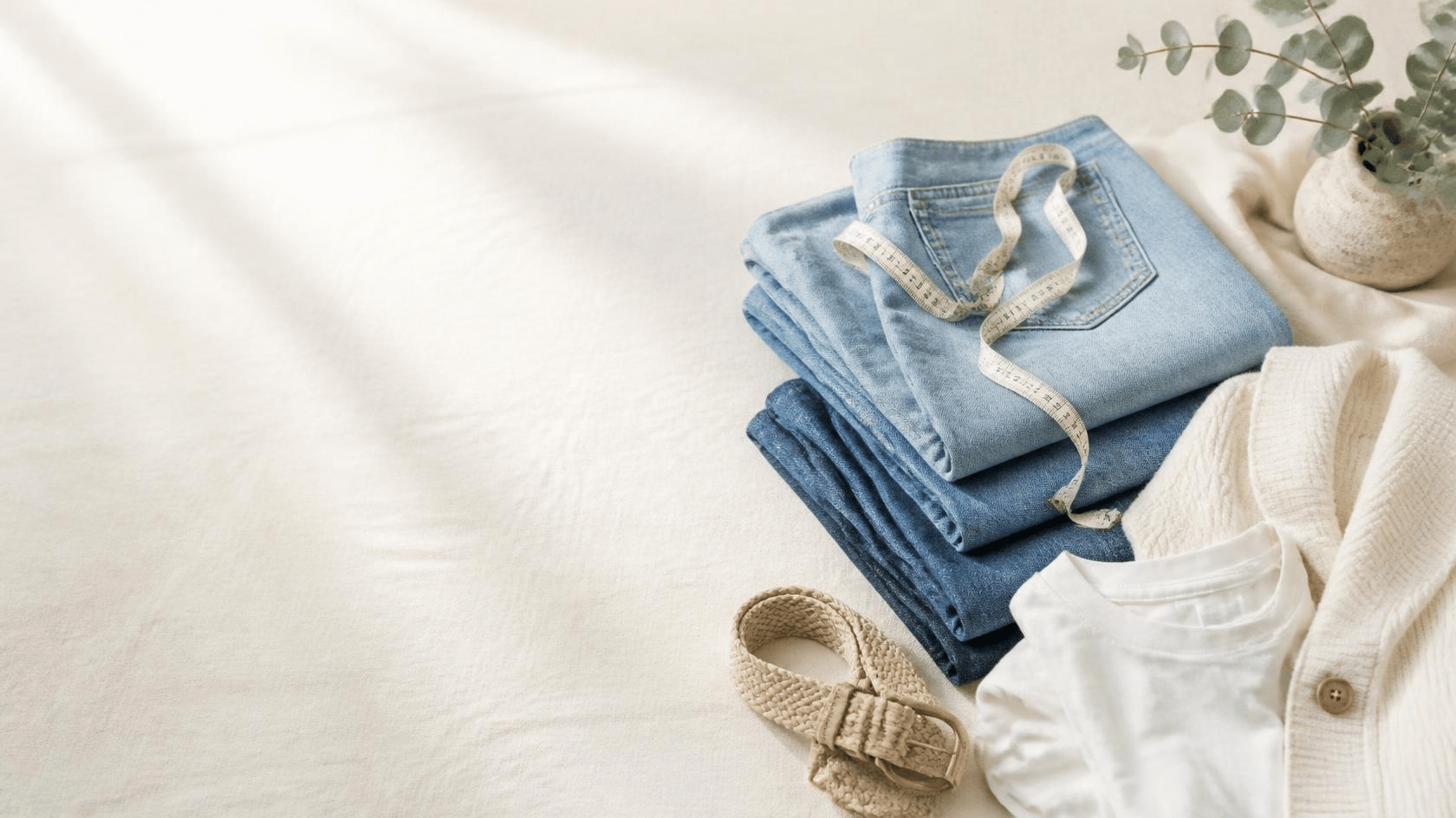
Buying clothes while losing weight is one of those everyday problems that rarely comes up in a medical consultation, yet it shapes how the whole process feels. One month your favorite jeans fit. A few months later you are cinching a belt, rolling the waistband, and wondering whether it makes sense to spend money on anything new when your size is still moving.
If that sounds familiar, you are in good company. Retail researchers are now tracking how weight loss medications are changing what people wear and where they shop. This guide is not a news recap. It is a practical walkthrough of when to wait, when to buy, what to buy in the in-between stage, and how to keep the cost under control. It also covers what to do with the clothes you no longer wear.
Why Your Wardrobe Is Often the First Thing to Stop Fitting
Clothes are the most immediate, everyday feedback you get during weight loss. The scale gives you a number, but your closet gives you a daily experience. And one category tends to show the change first: denim.
The shift is not small. Circana data reported by Retail Dive found that about 23 percent of U.S. households were using GLP-1 medications, up four percentage points from the year before.
In a June 2026 online survey of 737 U.S. adults who use or have used GLP-1 medications, reported by WWD, 90 percent of respondents said the jeans category had been disrupted, and 42 percent said their jeans were now completely unwearable, more than any other clothing category. It is a self-reported survey rather than a clinical study, so treat the numbers as a snapshot of experience, not a prediction for any one person. Still, the pattern makes sense. Jeans are structured, fitted at the waist and hips, and often have less stretch than knits or leggings, so even a modest change in size can show up there before it does in a loose sweater.
The takeaway is not that you need a new wardrobe right away. It is that the first mismatch you notice is usually in the most fitted pieces you own, and it is worth planning for rather than reacting to.
Why Sizes Keep Changing for Months, Not Weeks
Part of what makes buying clothes while losing weight tricky is that the change is gradual and ongoing. Large clinical trials give a sense of the time frame. In the STEP 1 trial of the brand-name semaglutide 2.4 mg product, participants lost an average of about 15 percent of their body weight over 68 weeks, as published in the New England Journal of Medicine. In the SURMOUNT-1 trial of the brand-name tirzepatide product, average weight loss ranged from roughly 15 to 21 percent over 72 weeks depending on dose, also reported in the New England Journal of Medicine.
Two important notes. First, those trials studied brand-name medications, and Medica Weight Loss does not dispense those products. Medica offers compounded semaglutide and tirzepatide, prepared by a state-licensed compounding pharmacy based on a valid individual prescription, so results in the trials should not be read as a promise of what any individual will experience. Second, individual results vary widely. Your pace, your starting point, your dose, and your habits all play a role, and your provider can talk through realistic expectations during a consultation.
What the trials do show is that weight change on these medications tends to unfold over many months. That is why a one-time shopping trip rarely solves the problem. For a general picture of how the early months tend to go, see our week-by-week GLP-1 timeline, and for what visible changes can look like, read how long it takes to see results.
The Real Challenge of Buying Clothes While Losing Weight
Most people face the same tension: buy now and risk the clothes fitting for only a few weeks, or wait and keep wearing things that no longer fit well.
The survey reported by WWD found that four in five GLP-1 users delayed buying new clothes until their size stabilized, and that the average cost of rebuilding a wardrobe was $328. Industry data points the same way. Circana data reported by Retail Dive found that 80 percent of GLP-1 households anticipated needing new clothing because of a change in size, and 55 percent had already bought new clothing or footwear primarily for that reason.
There is no single right answer, because the best choice depends on your budget, your job, your climate, and how quickly your size is changing. But there is a smart middle path: wait on the big, expensive, long-term purchases, and cover your real daily needs with a small, flexible set of pieces. The sections below show how.
When to Wait and When to Buy
Instead of deciding all at once, sort your clothing needs into three buckets.
Buy now:
- Anything you wear nearly every day that no longer fits safely or comfortably, such as work pants or a single pair of jeans.
- Undergarments and sports bras. A poor fit here affects comfort and support right away, and these pieces are worth replacing as you go.
- Footwear, if your feet are changing in a way that affects comfort or support.
- Anything needed for a specific event on a specific date, like a wedding or interview. Plan this around your fitting and tailoring timeline.
Buy cheaply or secondhand:
- Transition pieces you will only wear for a few months.
- Casual weekend basics such as tees, knit tops, and leggings.
- Trend pieces you are curious about but not sure you will keep.
Wait:
- Tailored items like blazers, suits, and structured coats.
- Expensive denim, designer pieces, and investment buys.
- Seasonal items you will not need for several months.
A useful rule of thumb is to ask how long a piece will realistically fit you. If the honest answer is a few weeks, keep the budget low. If the answer is years, wait until your size has been steady for a while.
How to Build a Transition Wardrobe
A transition wardrobe is a small group of forgiving, affordable pieces that carry you through the in-between months. The goal is not to build a perfect closet. It is to feel comfortable and put-together while your size settles.
Look for pieces with built-in flexibility:
- Stretch and knit fabrics. Jersey, ponte, and stretch cotton adjust to a wider range of sizes than rigid fabrics.
- Elastic or drawstring waistbands. They stay comfortable across a bigger range of sizes than a button-and-zip closure.
- Wrap styles. Wrap dresses, wrap tops, and tie-front pieces adjust as your shape changes.
- Belts. A simple belt can extend the life of a pair of pants for a few more weeks, and belts adjust easily as you go.
- Layers. Cardigans, open jackets, and long vests work across sizes and can add structure to a simple outfit.
- Neutral colors. Black, navy, gray, and white pieces mix and match easily, so a small number of items makes many outfits.
Five to eight well-chosen pieces, such as two pairs of pants, a few tops, a layer, and a dress or two, will cover most weeks and keep the cost down.
Smart Ways to Spend Less on a Changing Closet
The cost is one of the most common frustrations, and it is easy to spend more than you planned when everything feels like it needs replacing. A few approaches help.
Try secondhand first. In the survey reported by WWD, 41 percent of respondents said shopping secondhand was part of their solution while sizing down. That makes sense: if you only need a pair of jeans for a few months, paying full price rarely feels worth it. Thrift stores, consignment shops, and resale apps let you test a size without a big commitment.
Consider renting for one-off events. In a separate consumer survey reported by ConsumerAffairs, nearly one in four respondents said they were open to renting clothes. For a wedding or formal event that falls mid-transition, renting avoids paying full price for something you may only wear once.
Use a tailor. Taking in a waistband, hemming pants, or adjusting a favorite jacket often costs far less than replacing it. Tailoring works best when your size is fairly steady, so it is a good option for the later part of your transition and for pieces you love.
Shop in stages. Rather than replacing everything at once, buy for the next stage, wear it, and reassess. Setting a modest budget for each stage keeps the total from creeping up.
Check return policies before you buy. A generous return window removes much of the risk, especially for online orders where sizing is unpredictable.
Sell what still has value. Resale platforms can help offset costs. In the WWD-reported survey, 28 percent of respondents resold clothes they no longer wore, and those proceeds can go toward the next stage.
Measure Instead of Guessing Your Size
It is common to keep ordering the size you have always worn, even after your body has changed. A consumer survey reported by ConsumerAffairs found that nearly 70 percent of GLP-1 users still bought their old clothing sizes because they were unsure smaller sizes would fit, and that more than half kept old clothes out of fear of regaining weight. There is nothing wrong with this, but it can lead to returns, frustration, and clothes that do not fit the way you want them to.
A simple fix is to measure yourself every so often and compare the numbers with each retailer’s size chart. Sizing differs enormously between brands, so a number on a tag is a poor guide on its own. Useful measurements include:
- Natural waist, at the narrowest part of your torso
- Hips, at the fullest part
- Bust or chest, across the fullest part
- Inseam, from the crotch to where you want your pants to end
- Shoulder width, for tops and jackets
Write the numbers in your phone and update them every month or two. When you shop, compare your measurements with the brand’s chart instead of assuming a size. You may find you wear different sizes in different brands, which is completely normal. It can also be a pleasant surprise: in the WWD-reported survey, 62 percent of respondents said they could now fit into brands or stores they once avoided.
Expect Your Style to Evolve, Too
Many people find that their taste changes along with their size. According to the Circana data reported by Retail Dive, during their first year of GLP-1 use, households bought more active shorts, jeans, casual pants, bras, and dresses, which the firm tied to changing routines and higher confidence as well as smaller sizing needs.
The same ConsumerAffairs-reported survey found that 46 percent of respondents were experimenting with styles they would not have tried before. It also found that 29 percent felt a kind of imposter syndrome when shopping for their changing body. If that feeling sounds familiar, it is common, and it usually eases as the new size becomes your normal.
That is a good reason to treat your transition wardrobe as an experiment. Try a silhouette you have never worn, a color you used to avoid, or a fit that feels more like you. Because you are spending lightly on transition pieces, mistakes are cheap, and you learn what you actually enjoy wearing before you invest in more expensive items.
What to Do With Clothes That No Longer Fit
Your old clothes deserve a plan too. The WWD-reported survey found that 68 percent of respondents donate clothes they no longer wear, 54 percent store them just in case, 28 percent resell them, and 46 percent said they threw clothes away. Throwing clothes away is the least useful option, since textiles that are still wearable can often have a second life.
A simple way to approach it:
- Sort by condition. Pieces in good shape can be donated, sold, or passed to friends and family.
- Resell higher-value items. Quality denim, outerwear, and brand-name pieces often do well on resale platforms.
- Recycle worn-out textiles. Many cities and retailers accept clothing that is too worn to donate. Check your local program before tossing it.
- Repurpose. Old tees and denim can become cleaning rags, tote bags, or craft material.
Keeping one or two pieces is a personal choice, and it is completely reasonable. Some people keep a favorite item as a reference point for how far they have come, or as a bridge while they get comfortable with their new size. If you find that holding on to a lot of clothes is driven by worry or anxiety rather than practicality, it can help to mention this to your provider, who can talk through it with you.
If You Wear a Larger Size, You Still Deserve Clothes That Fit Now
Waiting to buy clothes until you reach a certain size can quietly turn into waiting to feel comfortable. If you wear a larger size today, you should not have to put your wardrobe on hold.
The retail landscape is shifting in ways that can make this harder. The WWD report found that 70 percent of surveyed GLP-1 users said they had left plus-size stores they once shopped, and Retail Dive notes that plus-size retailers such as Torrid and Destination XL have reported sales declines. At the same time, retailers are still working out how customers are moving between sizes, which means sizing and assortments are in flux.
A few practical tips:
- Buy what you need to feel comfortable and confident today, even if it is only a few pieces.
- Use the same strategies as everyone else: affordable transition pieces, secondhand, and tailoring.
- Do not feel pressure to shrink into a smaller size to deserve nice clothes. Your goals are your own, and clothes should serve you at every stage.
Clothes Are One Signal, Not the Whole Story
It is satisfying to feel a waistband loosen or to slip into a pair of pants that did not fit before. But clothing size is only one way to see change, and it is not a complete measure of health. Fit also depends on fabric, brand, and cut, and your body can change in ways a tag does not capture.
Many people on weight management treatment also pay attention to energy, sleep, mobility, and how they feel day to day, along with other health markers their provider tracks. If you want to understand the wider picture, our overview of health gains beyond the scale is a good place to start. Protecting muscle during weight loss is also part of the picture, so it is worth reading about protein and muscle on semaglutide therapy.
If thinking about size, shopping, or appearance starts to cause distress, or if you notice an unhealthy preoccupation with food or your body, let your provider know. Support is part of good care.
Keep Your Treatment Plan on Track
The best wardrobe plan is the one that fits around a steady, medically supervised routine. Clothes should follow your progress, not drive your decisions about treatment. Changing a dose, skipping doses, or stopping medication to manage how your clothes fit is a decision to make with your provider, not on your own. If you are curious about what happens after treatment ends, read what to expect if you stop.
If you are still deciding whether treatment is right for you, our guide to who may be a good candidate explains how eligibility works, and our step-by-step guide to getting started walks through what to expect from your first consultation. You can also read more about the options available through our semaglutide and tirzepatide programs, which are prescribed only after a consultation with a licensed provider.
Frequently Asked Questions About Buying Clothes While Losing Weight
Should I buy new clothes while I am still losing weight?
It depends on how quickly your size is changing and what you need. Many people cover essentials with a few affordable or secondhand pieces and wait to buy expensive items until their size has been steady for a while. If something you wear daily no longer fits well, replacing it is reasonable.
Why do jeans stop fitting first?
Jeans are fitted through the waist and hips and often have limited stretch, so small changes in size can be noticeable there before they show up in looser clothing. In the survey reported by WWD, jeans were the category respondents most often called unwearable.
How much does it cost to rebuild a wardrobe?
The survey reported by WWD put the average at $328, but your cost will depend on your needs and shopping choices. Buying secondhand, using tailoring, and shopping in stages can lower the total.
Is it better to buy secondhand during weight loss?
For short-term transition pieces, often yes. Secondhand clothes let you try a size at a low cost, and you can resell or donate them when your size changes again.
How do I know what size to buy?
Measure your waist, hips, bust or chest, and inseam, and compare them to each retailer’s size chart. Sizing varies a lot between brands, so your old size may no longer be the right one.
What should I do with clothes that are too big?
Sort them by condition. Donate or resell good pieces, recycle worn textiles through local programs, and repurpose what you can. Keeping one or two sentimental items is perfectly fine.
Will I stay the same size once I reach my goal?
Results and long-term outcomes vary from person to person. Staying in touch with your provider and following your care plan are the best ways to support your goals over time.
A Wardrobe That Moves With You
Buying clothes while losing weight does not have to be stressful or expensive. A small transition wardrobe, a plan for secondhand and tailoring, regular measurements, and a thoughtful approach to the clothes you already own can take most of the pressure off. Wait on the big purchases, cover your daily needs, and let your wardrobe catch up as your size settles.
If you have questions about starting or continuing treatment, a consultation is the best first step. A licensed provider can review your health history, talk through your goals, and explain what a medically supervised plan could look like for you.
Medica Weight Loss offers compounded semaglutide and tirzepatide, prepared by a state-licensed compounding pharmacy based on a valid individual prescription. These compounded medications are not FDA-approved — they have not been evaluated by the FDA for safety, effectiveness, or quality. Any reference to FDA-approved medications elsewhere refers solely to brand-name formulations such as Wegovy®, Ozempic®, Zepbound®, and Mounjaro®, which are not what Medica Weight Loss dispenses.