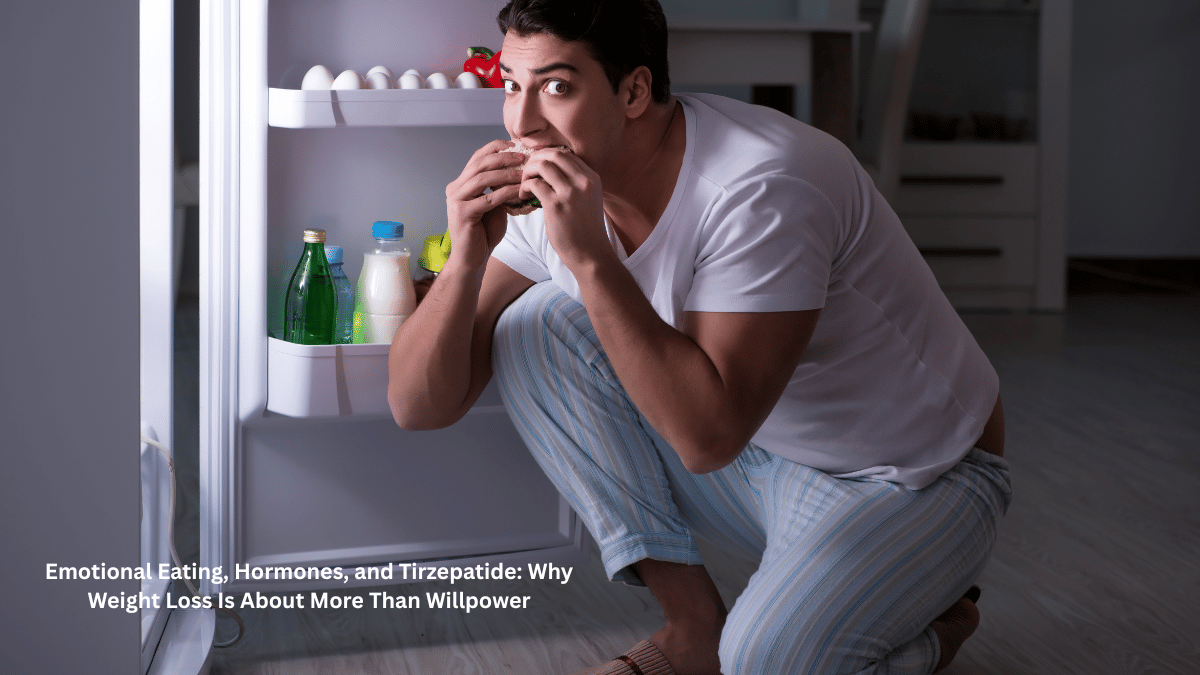
Emotional eating and tirzepatide are becoming increasingly important topics in modern obesity medicine. Many people struggling with weight loss feel frustrated by cravings, stress eating, and constant thoughts about food, often believing the problem is simply a lack of willpower. However, research shows that hormones, metabolism, brain chemistry, and appetite regulation all play major roles in eating behavior. This is one reason medications like tirzepatide are changing how healthcare providers approach weight management and metabolic health.
Instead of focusing only on “eating less,” newer treatments are helping address some of the biological drivers behind cravings, hunger, and food-related thoughts.
What Is Emotional Eating?
Emotional eating refers to eating in response to feelings rather than true physical hunger.
Common triggers include:
- Stress
- Anxiety
- Loneliness
- Depression
- Fatigue
- Boredom
- Frustration
- Reward-seeking behavior
Many people notice emotional eating patterns during:
- stressful workdays,
- late at night,
- after arguments,
- or during periods of emotional overwhelm.
In many cases, highly processed foods rich in sugar, fat, and salt temporarily activate reward centers in the brain, creating short-term feelings of comfort or relief.
The problem is that this cycle can become difficult to break over time.
The Hormone Connection Behind Cravings
Weight regulation is controlled by a complex network involving:
- hormones,
- the digestive system,
- the brain,
- and metabolism.
Several hormones are involved in appetite and cravings.
Ghrelin: The Hunger Hormone
Ghrelin is often called the “hunger hormone” because it signals the brain to increase appetite.
Stress, poor sleep, dieting, and weight fluctuations can affect ghrelin levels, making cravings more intense.
Cortisol: The Stress Hormone
Chronic stress increases cortisol levels. Elevated cortisol has been associated with:
- increased appetite,
- cravings for high-calorie foods,
- emotional eating,
- and abdominal fat accumulation.
This is one reason many people feel drawn toward comfort foods during stressful periods.
Insulin Resistance and Appetite
Insulin resistance can also influence hunger and cravings.
When the body struggles to regulate blood sugar efficiently, fluctuations in glucose levels may contribute to:
- increased hunger,
- energy crashes,
- and stronger cravings.
This helps explain why obesity is far more biologically complex than simply “eating too much.”
What Is “Food Noise”?
Many patients taking GLP-1 medications describe a dramatic reduction in something called “food noise.”
Food noise refers to:
- constant thoughts about food,
- obsessive cravings,
- preoccupation with eating,
- and feeling mentally consumed by hunger or snacking.
Some people describe it as:
- always thinking about the next meal,
- struggling to feel satisfied,
- or feeling emotionally controlled by cravings.
This experience can be exhausting and discouraging.
For many patients, one of the most life-changing effects of medications like tirzepatide is not just weight loss itself—but the feeling of mental quiet around food.
How Tirzepatide May Help With Emotional Eating
Tirzepatide is a medication that activates both:
- GLP-1 receptors,
- and GIP receptors.
These hormones help regulate:
- appetite,
- blood sugar,
- digestion,
- and satiety.
While tirzepatide is not officially approved specifically for emotional eating, many patients report improvements in behaviors connected to cravings and overeating.
1. Reduced Appetite
Tirzepatide helps many patients feel full sooner and stay satisfied longer after meals.
This may reduce:
- overeating,
- snacking,
- and impulsive eating.
2. Reduced Food Noise
Many users report fewer intrusive thoughts about food throughout the day.
Patients often describe:
- less obsession with eating,
- fewer cravings,
- and feeling more in control around food.
3. Improved Blood Sugar Stability
By improving insulin sensitivity and helping regulate blood sugar, tirzepatide may reduce some hunger and craving cycles associated with glucose fluctuations.
4. Better Portion Control
Many patients naturally eat smaller portions without feeling deprived.
This differs from traditional dieting, where people often rely heavily on willpower while still feeling intense hunger.
Emotional Eating Is Not a Personal Failure
One of the most important things modern obesity medicine recognizes is this:
Weight gain and overeating are influenced by biology, hormones, metabolism, environment, stress, sleep, medications, genetics, and brain signaling.
This does not mean lifestyle choices are unimportant. Nutrition, physical activity, sleep, stress management, and emotional health still matter tremendously.
But it does mean obesity should not be viewed as a simple lack of discipline.
Understanding the biological side of weight regulation can help reduce shame and encourage people to seek appropriate medical support.
Tirzepatide Works Best Alongside Healthy Habits
Although tirzepatide can be a powerful tool, long-term success still depends on building sustainable habits.
Patients may benefit from:
- mindful eating,
- stress management,
- adequate sleep,
- protein-focused nutrition,
- therapy or counseling,
- and regular physical activity.
The goal is not simply rapid weight loss—it is improving overall metabolic health and quality of life.
The Future of Obesity Treatment
For decades, obesity treatment focused mainly on calorie restriction and willpower.
Today, research increasingly shows that obesity is a chronic metabolic disease involving complex hormonal and neurological pathways.
Medications like tirzepatide are helping shift treatment toward a more science-based approach that addresses the biological factors influencing hunger, cravings, and eating behavior.
For many patients, this represents a major breakthrough—not only physically, but emotionally as well.
The Bottom Line
Emotional eating is influenced by far more than self-control alone. Hormones, stress, metabolism, brain signaling, and appetite regulation all contribute to cravings and eating behavior.
Tirzepatide may help some patients by:
- reducing appetite,
- lowering food noise,
- improving satiety,
- and supporting better metabolic health.
While no medication is a magic solution, modern obesity treatment is helping patients better understand—and manage—the biological drivers behind weight gain.
At Medica Weight Loss, we believe weight loss should be approached with science, compassion, and individualized care.
FAQ
Can tirzepatide stop emotional eating completely?
No medication can completely eliminate emotional eating, but many patients report fewer cravings and less food-related obsession while taking tirzepatide.
What is food noise?
Food noise refers to persistent thoughts about food, cravings, or mental preoccupation with eating.
Is emotional eating caused only by stress?
No. Emotional eating can involve stress, hormones, sleep, insulin resistance, brain chemistry, habits, and environmental triggers.
Does tirzepatide affect brain cravings?
Research suggests GLP-1 medications may influence appetite and reward pathways involved in cravings and eating behavior, although more research is ongoing.
Is obesity just about willpower?
Modern medical research recognizes obesity as a complex chronic disease influenced by biological, hormonal, genetic, behavioral, and environmental factors.